Protecting Bromley's Green Belt Starts with Using Existing Sites
While Bromley Council opposes development on Green Belt land, every empty building and every derelict site across the borough makes it easier for developers to persuade the London Mayor and central government that the shortage of housing justifies building on the green belt.
Bromley is rightly proud of its green spaces. As London's largest borough, it is also one of its greenest, with parks, woodlands and open countryside helping to define the character of the borough. These spaces are not just attractive places to visit. They support wildlife, help manage flooding, improve air quality and provide opportunities for recreation and wellbeing.
Yet these green spaces are under threat across the borough, with one key proposal to build around 2,200 homes on the land around Hayes Farm. Their argument is a familiar one: Bromley needs more homes and is failing to meet housing targets.
There is no doubt that more homes are needed. There are around 2,000 people on Bromley's housing waiting list and the pressure to increase housing supply is real. But before we accept the loss of valuable Green Belt land, we should ask whether we are making the best possible use of the sites we already have.
While Bromley Council opposes development on Green Belt land, every empty building and every derelict site across the borough makes it easier for developers to persuade the London Mayor and central government that the shortage of housing justifies building on the green belt.
Conquest House (the former Conservative club on Elmfield Road); this site has great potential for housing, yet there have been no plans presented by the developers (Taylor Wimpey) for 5+ years, while the site itself continues to be an eyesore.
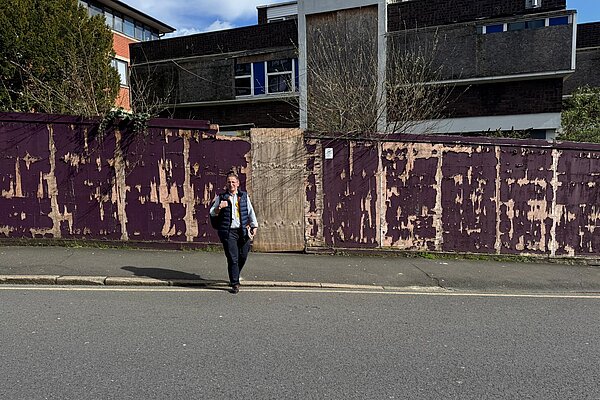
Bromley Heights (the building wrapped in purple that overlooks Kentish Way) is another example. This development will eventually deliver 61 shared ownership homes, yet there has been no progress on this site for over a year.
Maple House and Linden House on Masons Hill occupy a substantial site close to transport links, schools and shops. Rather than looking first at Green Belt land, we should be asking whether sites such as these can make a greater contribution to housing delivery.
Elsewhere, significant buildings remain vacant like the Bertha James Day Centre and Bertha James Court. Bertha James Court has stood empty for more than two decades despite having previously provided over 100 residential units. While modernisation would be needed, it remains an example of the kind of opportunity that should be explored before considering the permanent loss of open countryside.
Every empty building and every derelict site makes it easier for developers to argue that our Green Belt should be built on.
The issue is not simply about numbers. Reusing existing buildings is often more sustainable than demolition and rebuilding. It reduces waste, lowers carbon emissions and makes use of infrastructure that already exists. Bringing vacant sites back into use can also help rejuvenate Bromley town centre, increasing footfall, supporting local businesses and improving the appearance of neglected areas.
There are environmental reasons to think carefully before building on Green Belt land too. Open spaces help absorb rainfall and reduce the risk of flooding. Trees and green spaces cool urban areas during hot weather and provide habitats for wildlife. Once these spaces are built on, they are impossible to replace.
The choice facing Bromley is not between building on the Green Belt or building nothing at all. There is a third option: making better use of the land and buildings that have already been developed.
That means pushing developers to complete half-finished schemes, encouraging redevelopment proposals for long-abandoned sites and accelerating plans for vacant public buildings that have stood empty for years. Housing targets are not met simply by identifying land. They are met by ensuring that homes are actually built.
If Bromley wants to protect its Green Belt successfully, it must remove the arguments used to justify its loss. The strongest defence of our open spaces is not simply opposing development proposals. It is demonstrating that every realistic opportunity to build on existing sites has been exhausted first.
Until that happens, every empty building and every derelict site makes it easier for developers to argue that our Green Belt should be built on.
Bromley can deliver more homes while protecting the green spaces that make the borough such a special place to live. But doing so will require determination, imagination and a commitment to making full use of what we already have before sacrificing what we can never get back.