A healthy ocean is the foundation of a secure Britain
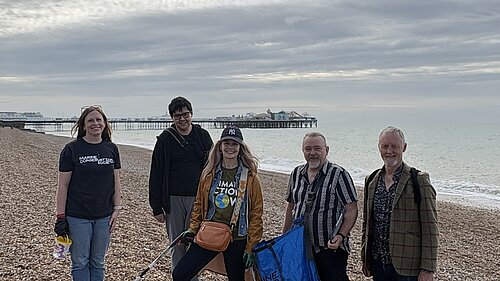
Fiona Thomas, Head of Public Affairs, Marine Conservation Society, and Jacques Villemot, Marine Rewilding Lead, Rewilding Britain, talk about our oceans being more than an environmental assest, but as a vital national infrastructure too, and that is why the Liberal Democrats should put ocean recovery at the heart of a vision for a more secure, resilient and prosperous Britain.
No community in the UK is more than 70 miles from the sea. Yet much of what happens beneath the waves is hidden from view, which means we all too often overlook just how much of our prosperity, security and resilience depends upon healthy, living seas.
For an island nation, that is a dangerous blind spot. Our oceans are not simply an environmental asset. They are vital national infrastructure.
Whether it is a family holiday in Tenby, a walk along the coast in North Berwick, or a beachcomb in Brighton, our connection to the sea runs deep. But our seas are far more than a backdrop to our lives. They support coastal tourism and recreation, sustainable fisheries, ports, shipping and renewable energy. Coastal tourism and recreation alone support more than 460,000 jobs across the UK, while marine recreation delivers around £1 billion in health and wellbeing benefits each year.
The benefits of more resilient coastal waters go far beyond the economy. Healthy seas help put food on our tables, protect coastal communities from increasingly frequent severe weather events, and will be central to delivering the clean, just energy transition communities across the UK need.
That is why the Liberal Democrats should put ocean recovery at the heart of your vision for a more secure, resilient and prosperous Britain.
Yet the natural systems that support these benefits are under sustained and growing pressure from sewage discharges, plastic pollution, harmful chemicals and ongoing habitat loss and damage, including tragically in many of our Marine Protected Areas (MPAs). Environmental degradation does not stay in the environment alone. It shows up in higher costs for businesses, mounting pressures on our fishing communities, reduced tourism revenues, and rising bills for taxpayers. When marine ecosystems decline, so too does the resilience of our economy and our coastal communities.
The Liberal Democrats have long recognised that a healthy economy and a healthy environment are not competing priorities. From fighting against sewage pollution to championing ambitious climate and nature targets, the party has consistently recognised that long-term prosperity depends on restoring the natural systems on which we all rely.
That principle must now extend further and more deeply to help Britain’s seas.
Take marine litter. Every year, bottles, cans and plastic packaging find their way onto beaches and into the ocean. They harm wildlife, damage habitats, undermine the visitor economy and leave local communities paying for the clean-up. The Liberal Democrat-led Bournemouth, Christchurch and Poole Council spent almost £600,000 cleaning its beaches in 2024/25 alone. Money spent tackling avoidable litter is money that cannot be invested elsewhere.
That is why the UK Government must finally deliver the Deposit Return Scheme by October 2027. This should be a firm deadline, not another target allowed to drift. Deposit Return Schemes have been proven to reduce litter, increase recycling rates and keep valuable materials, like aluminium and plastic, in circulation rather than allowing them to pollute our coastlines and seas.
We also need to tackle water pollution at source. The forthcoming Clean Water Bill presents a major opportunity to strengthen monitoring, transparency and enforcement, while addressing not only sewage pollution but also emerging threats such as PFAS chemicals and microplastics. Any new legislation should embrace the polluter pays principle and prioritise investment that prevents pollution from entering our waterways in the first place. It is cheaper, fairer and more effective to prevent pollution than to try to clean it up once it has reached our rivers and seas.
Pollution is only part of the challenge. The UK has lost more than 90 per cent of its seagrass meadows and oyster reefs, alongside vast areas of saltmarsh and, in some places, almost all of its kelp forests. These habitats are a gaping hole in our fight against climate change. They act as natural barriers to wave energy and erosion, store carbon, improve water quality and provide vital nursery grounds for fish. While hard engineering has a role to play, it is often expensive, temporary and unable to deliver the wider benefits that healthy marine ecosystems provide. Rebuilding these habitats would make our coasts more resilient, give fish vital new places to feed and breed, and improve water quality.
That is why ocean recovery must be treated as an investment in national resilience and coastal prosperity. The UK Government should treat marine ecosystems like any other strategic asset, embedding their value into infrastructure decisions and creating a clear plan for a sustainable blue economy. As billions flow into offshore wind, we should ensure some of that investment helps restore the ecosystems on which long-term prosperity depends.
We must also make it easier for communities to act. The current marine licensing system is often too complex and costly for community-led restoration projects, forcing local groups restoring seagrass or oyster reefs to navigate the same processes as major developments. Streamlining these rules would unlock the ambition and expertise already present in coastal communities.
And we should think bigger. Seascape-scale restoration projects, such as those being pioneered in the Solent and Humber, recognise that marine habitats are interconnected systems. Restoring habitats in isolation is not enough. Working at nature's scale offers the greatest benefits for coastal communities, fisheries, biodiversity and climate resilience.
The Liberal Democrats have a chance to make healthy seas a national priority. Not simply because it is good for nature, but because it is good for Britain. If we want stronger coastal communities, greater energy and food security, a thriving blue economy and a more resilient future, we must stop treating our oceans as out of sight and out of mind.
A healthy ocean is one of Britain's greatest assets, and one of our best defences against the economic, climate and security challenges that lie ahead.