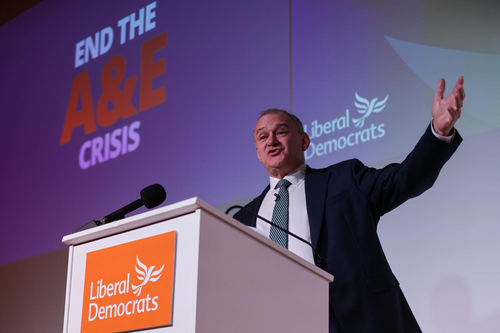
Our plan to end the A&E corridor crisis
30,000 people wait for over 12 hours in A&E departments every single week - it's a national scandal and we have a plan to stop it.
Years of Conservative mismanagement pushed our NHS to breaking point and Labour’s promises won’t be enough without urgent reform.
Nowhere is that clearer than in our emergency care services. From patients dying in A&E waiting rooms, to families waiting hours for ambulances, the crisis has become intolerable.
Dangerous practices like ‘corridor care’ – where patients are left waiting on trolleys in hallways without dignity, safety, or proper attention – have been normalised. Ambulance hubs have been under threat, air ambulances rely on charity funding, and too many people are left without urgent care when they need it most.
Last month a Freedom of Information request by our team uncovered that 2.7 million people made their own way to A&E last year, rather than waiting for an ambulance - a 14% increase since 2019. Over 250,000 of those people required serious, urgent medical assistance.
These figures lay bare the reality of this crisis, where people do not think they can rely on ambulance services even in the most serious of circumstances. This could have deadly consequences if people have lost faith that ambulances will be there when they need them.

Nobody should have to take themselves to A&E in a life and death situation because they can’t trust an ambulance to arrive in time. We must end the Uber Ambulance Crisis - means reversing the closure of ambulance centres, and an urgent campaign to recruit, retain and train paramedics.
— Liberal Democrats (@libdems.org.uk) 2025-08-18T16:41:10.772Z
Liberal Democrats are determined to turn this around.
Today our members have passed new policy to get emergency care back on track, calling on the Government to:
Rescue and protect our ambulance services, designating every ambulance hub as critical infrastructure, integrating air ambulances into the NHS with guaranteed funding, and launching a new national drive to recruit rural Community First Responders.
When people turn to the NHS in dire need, they deserve emergency care where lives are saved and patients can trust that help will come.
Instead, under the Conservatives, it became a symbol of neglect and crisis.
Labour has promised new investment, but without urgent reforms to social care and a systematic plan to build resilience, that investment will not be enough.
Our proposals would not only bring dignity back to patients in crisis but also protect the NHS workforce, restore public trust, and save lives.